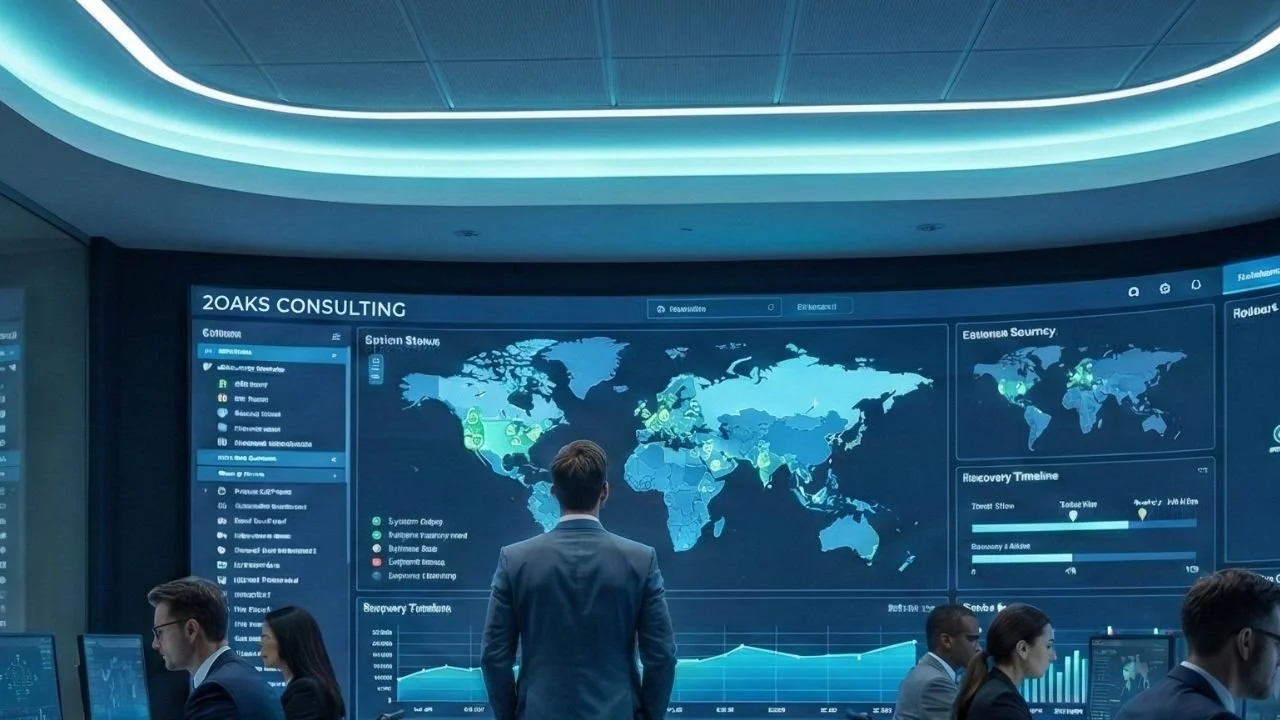
Mergers and Acquisitions
At 2Oaks, we specialize in guiding organizations through complex mergers, acquisitions, and divestitures. Our expertise ensures seamless integration of operations and technologies while maintaining business continuity throughout your M&A journey.
Key Components of Our Service
-
Thorough preparation is critical for M&A success. Our team helps:
Conduct comprehensive assessments of operational, technological, and cultural compatibility between organizations
Identify and evaluate potential synergies, risks, and integration challenges that could impact the transaction
Develop strategic recommendations based on detailed analysis of merger or acquisition opportunities
-
Successful integration requires careful planning and execution. We help:
Create detailed integration strategies that align systems, processes, and teams across organizations
Develop comprehensive roadmaps that address key dependencies and integration milestones
Ensure technology architecture decisions support long-term business objectives
-
Effective change management is crucial for M&A success. Our team will:
Design and implement stakeholder engagement strategies to minimize resistance and build buy-in
Develop comprehensive communication plans for managing both internal and external messaging
Guide cultural integration initiatives to ensure smooth team transitions and collaboration
-
Technology integration requires careful planning and execution. We help:
Design and oversee system migration and integration strategies that minimize disruption
Establish governance frameworks for managing system transitions and decommissioning
Address critical considerations around cybersecurity, compliance, and operational risk
-
Coordinated execution is essential for successful integration. We help:
Manage cross-functional teams and complex dependencies to maintain project timelines
Oversee Day 1 readiness planning and execution of critical integration milestones
Facilitate smooth handovers between merging organizations and internal teams
-
Managing risk throughout the M&A process is crucial. We help:
Develop comprehensive risk management frameworks specific to M&A initiatives
Establish governance structures to oversee integration activities and decision-making
Create monitoring systems to track progress and ensure regulatory compliance
-
Success requires ongoing attention and refinement. Our team will:
Provide regular assessments of integration progress and value realization
Recommend and implement adjustments to optimize outcomes
Support continuous improvement initiatives across merged operations
-
Realizing value from M&A requires ongoing attention. Our team will:
Evaluate integration effectiveness and identify opportunities for improvement
Implement optimization strategies to maximize operational synergies and efficiency
Provide continued support for enhancing merged operations and achieving strategic goals
Partner with 2Oaks to transform your M&A challenges into opportunities for sustainable growth and success. Our collaborative, client-centered approach ensures your organization achieves its strategic objectives while minimizing disruption and maximizing value creation.

Your Questions Answered
When should we start technology planning for a merger or acquisition?
Earlier than most boards expect. The integrations that go well begin technology planning 12 to 18 months before close, which leaves time for data remediation, testing in non-production environments, and rollback planning before any conversion weekend. Starting late is one of the most common reasons conversions overrun and timelines slip. Our article Common Integration Challenges and How to Navigate Them covers the predictable patterns and how to plan around them.
What does technology due diligence for a merger actually cover?
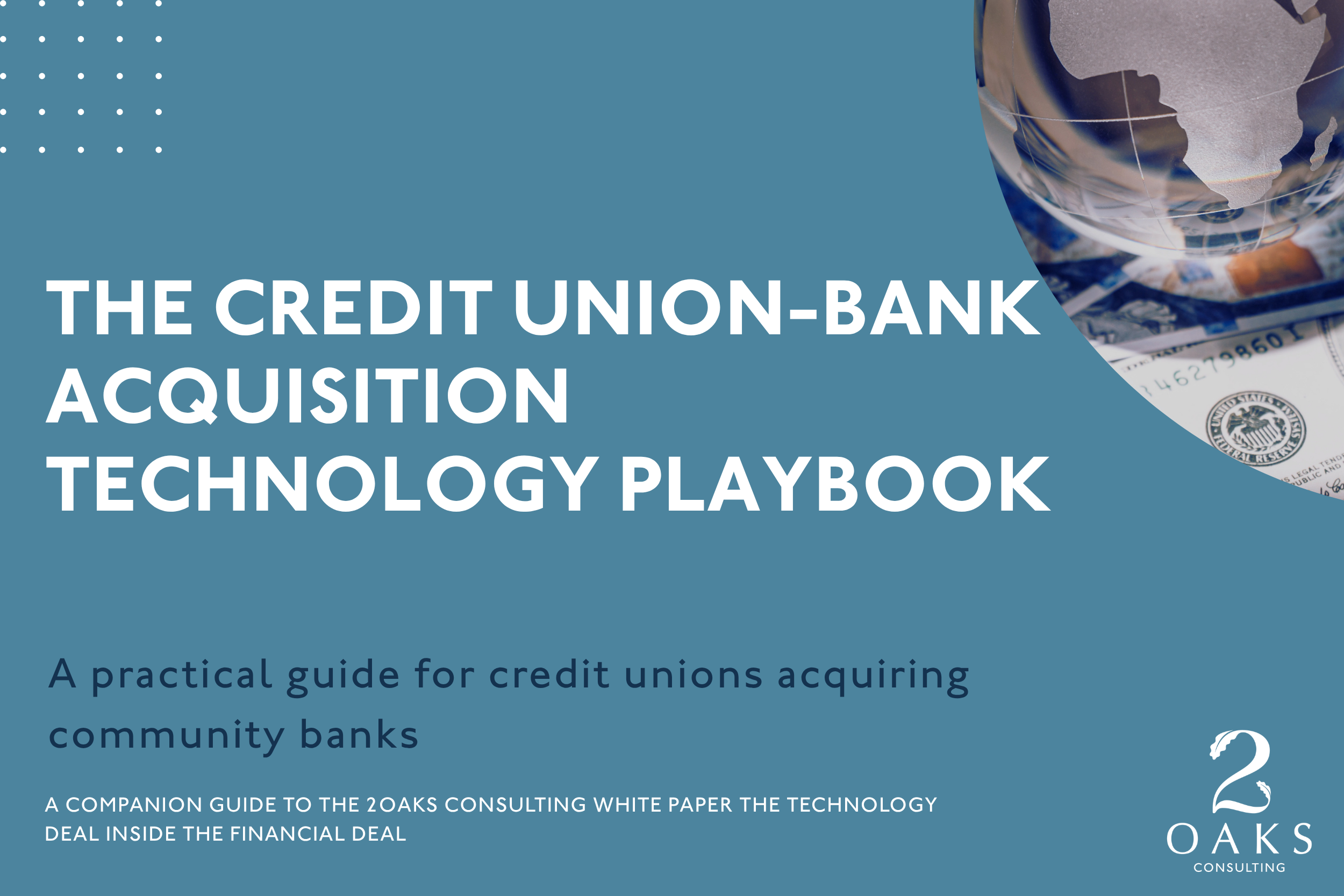
It goes well beyond confirming what core and ancillary systems each institution is running. We assess the core platforms, how they would realize synergistic benefits through consolidation, the quality of the data you would inherit, the integration dependencies between systems, and the contracts and licensing that come with them. The part institutions most often underestimate is the web of ancillary systems (cards, loans, payments, digital banking, and CRM) that quietly connect to the core and have to be converted too. We wrote about that specific risk in The Hidden Risks of Ancillary Systems in Core Banking Transformation.
Is technology really the deciding factor in whether a merger creates value?
In most of the deals we see, yes. Strategy and culture matter, but the merger that stalls usually stalls on execution, and most often on technology: core conversions that run long, data problems that surface during migration, and operational dependencies that due diligence overlooked. The gap between technology leaders and laggards is widening, which changes the Business Case behind consolidation. Technology as Competitive Differentiator explains how modern cloud architecture affects that calculation.
What is driving all this consolidation, and is now the time to act?
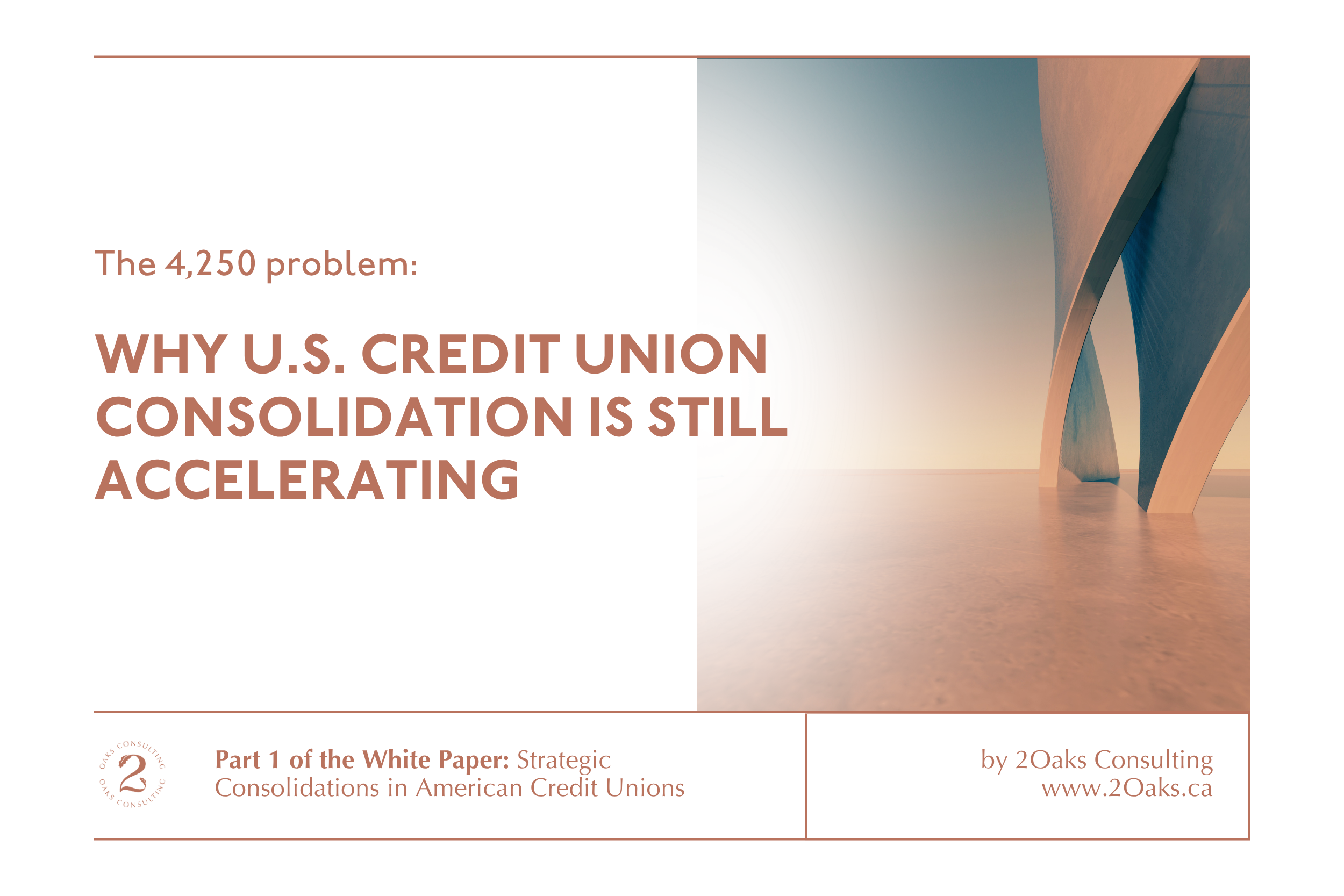
Structural pressure rather than a temporary trend: regulatory complexity, the rising cost of technology investment, and changing member and customer expectations. In 1966 Canada had over 3,200 credit unions, separate from about 1,600 Desjardins caisses populaires; outside Quebec and excluding Desjardins, just 189 remained as of mid-2024 (CCUA), and the number keeps falling through mergers each year. In the US, the system lost 161 institutions in the past year even as assets and membership grew. Whether now is your moment depends on your technology readiness and your options, which is exactly what we help boards pressure-test. Our analysis is in The Consolidation Imperative for Canada and The 4,250 Problem for the US.
Does the technology merger happen the day the deal closes?
You would be advising us on the deal. How do we know the guidance is independent?
How do regulatory approvals affect the technology and integration timeline?
Not automatically, and assuming so is one of the more common misreads of the timeline. Legal close and the technical merger, most notably the core conversion, are two different events that get planned on their own schedule. Depending on the deal, the conversion can happen right at legal close or well after it; what matters is that the timing is a deliberate decision, not a default. What does have to be ready on Day 1, regardless of when conversion happens, is continuity: members and customers need uninterrupted access to their accounts, staff need working systems, and nothing customer-facing should signal that anything happened. The heavier work, data remediation, testing in non-production environments, and the conversion weekend itself, is scheduled for whenever it best fits the deal, not compressed to match it. This work is set out in our Data Migration service.
2Oaks is vendor-neutral, so our due diligence, target-state architecture, and platform recommendations reflect what fits the combined organization rather than what suits a supplier / vendor. We also work alongside your integration, technology, and risk teams and transfer capability as we go, so your people own the result rather than depending on us afterward. Our partners and practitioners have run these conversions from inside financial institutions, so the advice comes from having done this work many times. You can see how that independence works on The 2Oaks Difference.
Can 2Oaks help set up a Merger Integration Office (MIO) and manage the program plan?
Yes. Most institutions have been through a merger before, but few have the internal bandwidth to run a disciplined integration office on top of their day jobs. We help stand up the MIO, build the master program plan, and break it into the workstream-level project plans that keep due diligence, technology, operations, and communications moving in step rather than in isolation. Because our team has run these programs from inside financial institutions, the cadence, milestones, and escalation paths we set up are built for how integrations actually run into trouble, not lifted from a generic template.
More than most deal teams plan for, because the conversion cannot be scheduled until the approvals and the member vote are in hand. In the US, a credit union merger needs NCUA approval and a member vote, and a credit union acquiring a community bank adds the bank's regulator (FDIC, OCC, or a state agency), can draw antitrust review, and brings sharper public scrutiny, each of which can move the close date. In Canada, amalgamations need approval from OSFI or the relevant provincial regulator, along with a member vote. We build the technology plan around that regulatory calendar rather than a target date, so data remediation, testing, and the conversion weekend line up with when the deal can actually close. That is a large part of why the technology work starts 12 to 18 months out, as we cover in Common Integration Challenges and How to Navigate Them.
Explore Other Services
-
![A man in a suit giving a presentation with a digital screen displaying graphs and charts at night.]()
Executive Technology Advisory Service
-
![Two colleagues, a woman and a man, working together at a conference table in a modern office at night. They are leaning over a laptop and looking at it with smiles, with coffee cups on the table and colorful sticky notes on the glass walls.]()
Enterprise Architecture and Strategy Roadmapping
-
![]()
Business Continuity Planning
-
![]()
AI Maturity and Readiness Assessment and Strategy
-
![]()
Virtual (Fractional) CIO